
The Best AI SEO Tools for Agencies Scaling Content in 2026
Compare the best AI SEO tools for agencies in 2026. See which platforms deliver scalable content without sacrificing quality, structure, or brand trust.

When Marcus’s 12‑person SEO agency started testing AI content generation, the first month looked like a breakthrough: output tripled, turnaround times collapsed, and the team felt they had cracked the scaling problem. Then the client emails arrived. A fintech piece cited an interest rate that had changed two years earlier. A healthcare article recommended a procedure the clinic didn’t offer. The tool had produced grammatically flawless text, but it had no grounding in the sites it was writing for — and no mechanism to catch factual drift. Marcus realized he didn’t just need a text generator; he needed an AI publishing system that understood site context, enforced quality checks, and could be tuned to each client’s editorial bar.
That tension — speed versus control — is what makes choosing a platform difficult for agencies in 2026. Google AI Mode now reaches 200 million users and triggers on roughly 48% of tracked queries, up 58% year‑over‑year, while Google’s own guidance confirms that foundational SEO best practices still underpin performance in generative search features. For an agency managing multiple clients, the tool that gets picked doesn’t just influence content volume — it shapes brand risk, client retention, and visibility across AI‑native search surfaces. This comparison evaluates the AI‑driven SEO platforms that have moved past raw text generation and built in the safeguards, integrations, and quality signals agencies actually need.
What an AI SEO Platform Must Get Right for Agency Workflows
Most lists of AI SEO tools focus on feature checkboxes: keyword research, content editor, tone settings. Those matter, but agencies carry a different risk profile. When one editorial mistake costs a client relationship, the evaluation criteria shift toward reliability, auditability, and how tightly the tool fits into an existing publishing stack. Below are the capabilities that separate agency‑grade tools from general‑purpose writers.
Site awareness and brand grounding. A tool that writes generic articles trains the client to doubt every draft. Platforms that read the target site’s existing pages — its recurring terminology, product descriptions, service categories — produce text that sounds like it belongs on that domain, not like a remixed Wikipedia entry. The best configurations ingest the full site before drafting a single paragraph. That pre‑read step is the difference between articles that pass client review on the first read and those that get sent back for rewording.
Explicit quality scoring and hallucination controls. Many AI writers output text and declare the job done. But in 2026, Google’s AI features retrieve content from its index using signals that reward factual solidity and semantic coherence. A platform that provides a numerical quality score — measuring semantic drift, entity coverage, and factual grounding — gives an agency a defensible checkpoint before anything goes live. When a grading system breaks down exactly where a draft deviates from the brief, editors can fix the article in minutes instead of re‑reading the entire piece.
Content calendar automation and CMS integration. Agencies don’t publish one article; they publish dozens per client per month. Manual copy‑pasting from a tool into WordPress or Webflow erodes the efficiency AI promises. The platforms worth committing to either integrate directly with popular CMSs or provide an API that moves content from approval to publication without a human bottleneck at the final mile.
Multi‑client governance. Switching between ten different brand voices, keyword clusters, and editorial guidelines demands a workspace that separates client projects cleanly. Look for project‑level settings, separate scoring dashboards, and content calendars that map to each client’s publishing rhythm — not a single‑threaded editor that forces you to remember which rules apply to which account.
AI‑visibility tracking. Organic search is no longer only about blue links. Google AI Mode, AI Overviews, and external answer engines like ChatGPT and Perplexity surface content without a click. The Google Search Central documentation notes that the same foundational SEO practices apply, but agencies need to know whether their content is being cited in AI answers, which entities are being referenced, and how that changes over time. Tools that include AI‑visibility monitoring close the loop between publishing and performance.
Where Agencies Are Testing Their Next Platform
The commercial investigation behind queries for the best seo ai tools is strong: agencies are actively comparing platforms that promise more than content generation. The three tools below surfaced repeatedly in mid‑2026 SERP analysis, each approaching the agency problem from a slightly different angle. The descriptions that follow are drawn from their public positioning and editorial reviews.
SE Ranking
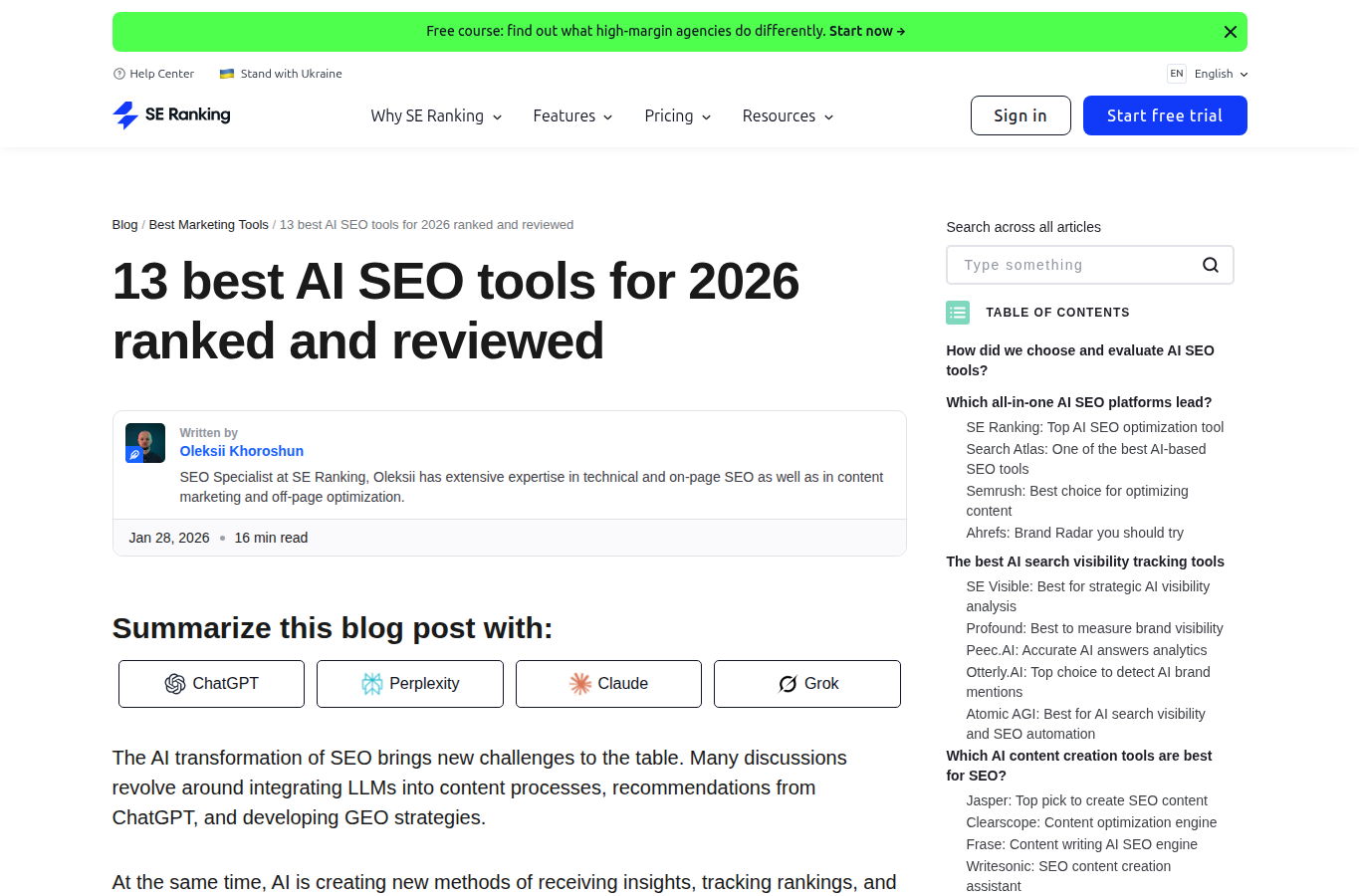
SE Ranking has spent years as a traditional SEO suite, and its 2026 iteration extends that heritage into AI‑assisted workflows. The platform bundles keyword research, rank tracking, and an AI content editor into a single dashboard, which reduces tool switching for agencies that want one login for both research and content production. The AI features focus on on‑page optimization suggestions and content scoring that draws on the platform’s own SERP data. Its white‑label reporting and client‑facing dashboards make it a practical choice for agencies that need to present progress without exposing the underlying tool stack. SE Ranking has also begun layering AI‑overview tracking into its rank‑monitoring module, a move that acknowledges the shift toward generative search. Explore the platform at SE Ranking.
SEovendor
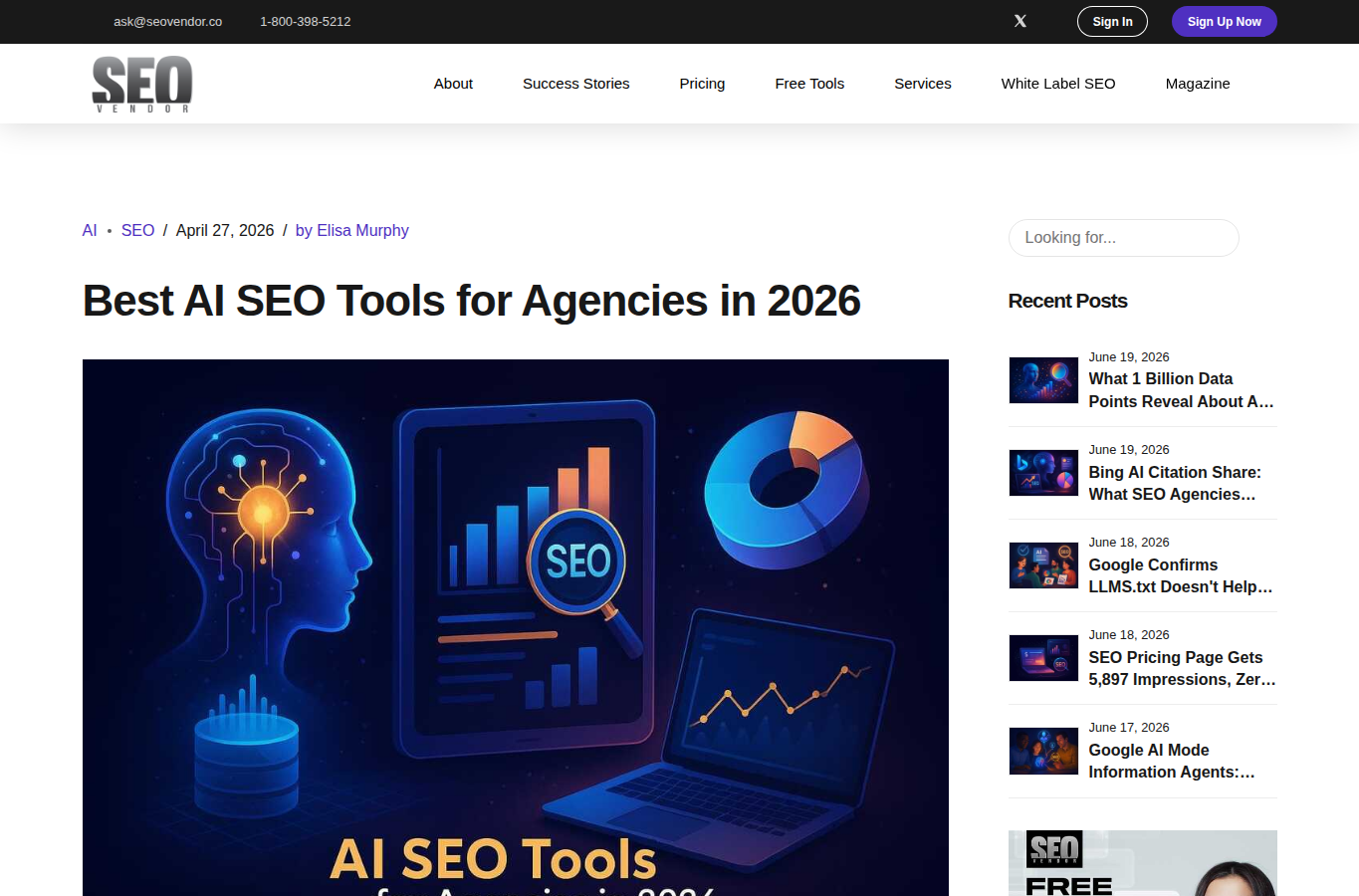
SEovendor positions itself squarely for agency use, with emphasis on multi‑project management and workflow coverage that spans audits, briefs, link analysis, and content generation. The platform’s AI assistant prioritizes flagging SEO issues — ranking drops, technical gaps, content decay — before they become client escalations, which matters for account managers who oversee ten or more projects. Pricing is structured in tiers that accommodate five to forty SEO projects, and its backlink sorting groups risky and opportunistic links into categories so that agency teams can prioritize outreach and disavowals across large portfolios. The tool expects human review for sensitive decisions, and its documentation is candid about that expectation. SEovendor is worth a close look if your agency’s risk is concentrated in technical oversight and link governance.
Snezzi
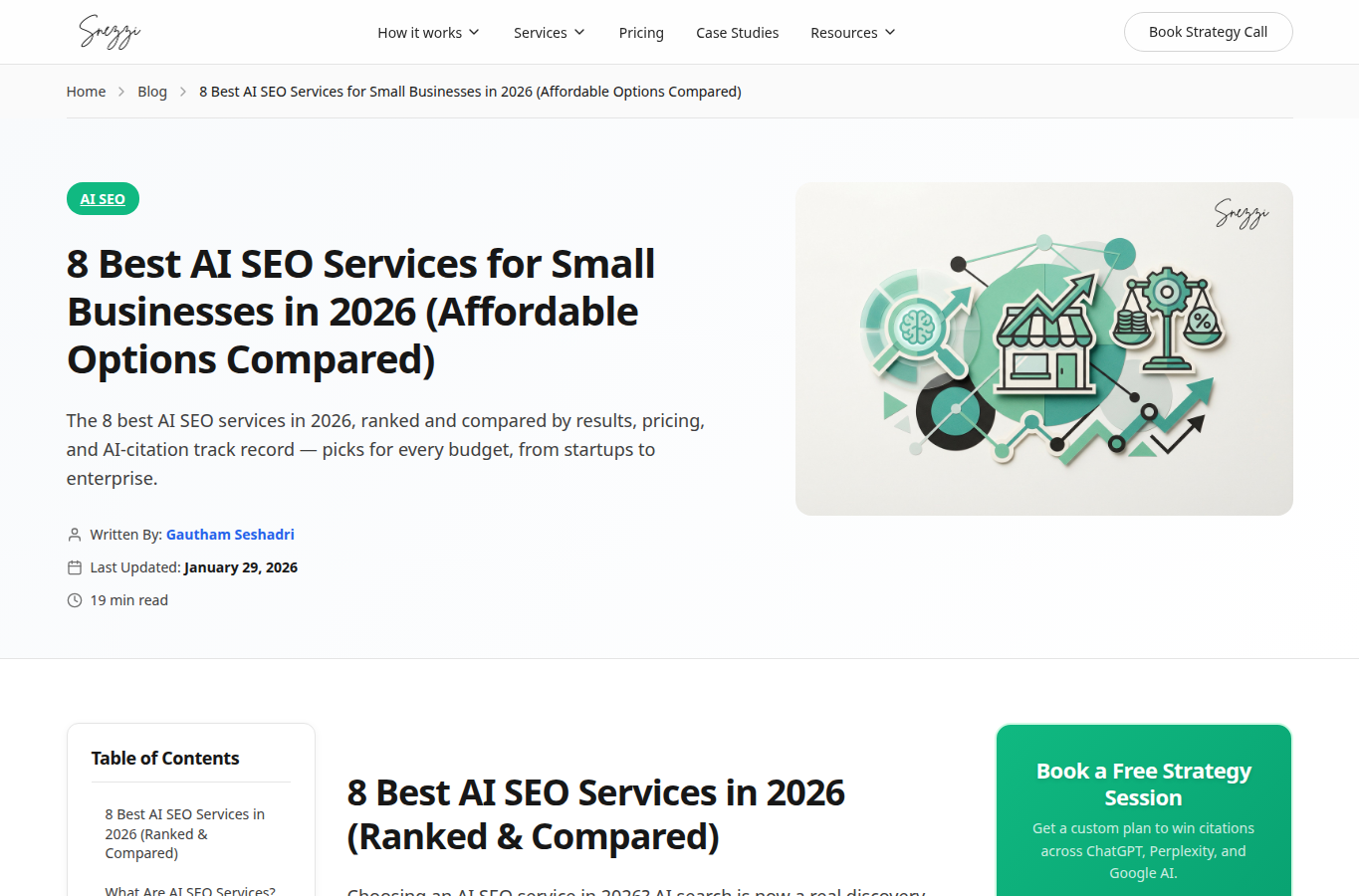
Snezzi’s 2026 entry is narrower and more specific to the emerging Generative Engine Optimization (GEO) discipline. Instead of trying to replace a full SEO stack, it concentrates on monitoring and improving visibility across ChatGPT, Perplexity, Google AI Overviews, and Claude. For agencies that already have a preferred content creation tool but lack a way to track how their work appears in AI‑generated answers, Snezzi provides a done‑for‑you layer that audits citations, flags missing brand mentions, and maps the gap between traditional organic traffic and AI‑sourced visibility. This makes it less a standalone content platform and more a specialist add‑on for agencies that recognize they are losing traffic to zero‑click answers. The 9 best ai seo tools site outlines how its visibility dashboard helps translate AI‑citation data into client‑facing reports.
The Difference Between “Publishing More” and “Publishing Soundly”
It’s seductive to measure AI SEO tool performance in articles per week, but velocity without a quality control architecture eventually backfires. Agencies that publish AI‑drafted content without a structured editorial layer often run into the same pattern: the first batch of articles impresses, the third batch raises client questions, and by the sixth month the account manager is debating whether to pull the plug.
Consider Casey, who runs a boutique agency serving B2B SaaS companies. She adopted a popular AI writer and pushed out fifteen long‑form pieces for a cybersecurity client in six weeks. The articles passed Grammarly and plagiarism checks. But they all missed the nuance that the client’s product was a compliance platform, not a threat‑detection tool, because the AI had no knowledge of the client’s actual feature set. Casey lost the account, not because the content was bad, but because it drifted semantically from what the company actually built. She later switched to a system that first analyzed the client’s website — scanning product pages, case studies, and existing blog content — before generating any new article. The onboarding step added a few minutes per client but eliminated the brand‑alignment errors that had been costing her business.
This is where a platform’s architecture begins to matter more than its UI. A tool that performs site‑aware pre‑reading before writing can anchor its output in the client’s real terminology and subject matter. A tool that assigns a discrete quality score — measuring how well the draft covers the intended entities, how closely it matches the site’s existing semantic footprint, and how far it deviates from the brief — gives the human editor a fast triage signal. Without that signal, editors waste time re‑reading entire articles for drift instead of scanning a dashboard and jumping to the flagged sections.
Some platforms now incorporate a pipeline that reads a website, generates a keyword‑backed content calendar, routes articles to different AI models based on intent, and then scores each draft against both the brief and the site’s own voice. That approach treats the article not as a one‑off generation event but as a structured workflow that ends with a review‑ready draft. For agencies, that means the editorial team spends time strengthening arguments and verifying claims — not rewriting sentences to make them sound like the client. The platform’s own documentation on post‑publishing metrics shows how a quality‑first workflow can reduce the downstream editorial burden.
How AI Visibility Monitoring Changes the Client Conversation
Agencies have always reported on rankings and traffic. In 2026, clients are increasingly asking a harder question: “Are we showing up in AI Overviews? In ChatGPT answers? In Google AI Mode?” The data suggests that roughly 60% of searches now yield no clicks, and Google’s own AI Mode has surpassed a billion monthly users. When a prospective customer gets their answer without visiting a site, the agency needs a defensible way to show that its content is still being referenced — and that it’s influencing the answers the AI generates.
This is where AI‑visibility tracking becomes a differentiator. A tool that reports brand mention rate in AI Mode, citation share across generative answer engines, or entity‑level visibility lets an agency demonstrate value even when organic click‑through rates decline. SE Ranking has begun layering AI‑overview tracking into its rank‑monitoring module. Snezzi, as noted, built its entire product around this capability. Other platforms are adding API integrations that pull AI‑citation data into existing dashboards.
But tracking alone is not enough. The real operational question is whether the content creation tool learns from visibility data. If a client’s articles are getting cited for the wrong entities, or not cited at all for a target cluster, can the platform adjust the content briefs and keyword assignments for the next sprint? The best SEO AI setups close that loop, feeding visibility signals back into the content calendar so that editorial decisions aren’t based on last quarter’s assumptions. Agencies that couple monitoring with an adaptive publishing engine are the ones that show clients measurable influence over generative search, even as click‑through patterns shift.
Questions to Run Through Before You Commit
No single platform fits every agency, and the right choice often depends on things that spec sheets don’t capture — like how your team edits, what your clients trust, and where the bulk of your content risk sits.
Does the tool read the client’s site before it writes?
If the platform starts from a blank prompt or a keyword list without ingesting the target domain’s pages, you inherit all the brand‑alignment risk yourself. The time an agency saves in brief creation it often spends later in rewrites. Platforms that perform a site crawl at the beginning of the project — pulling in product names, tone signals, and existing content structure — tend to produce drafts that need less structural editing.
What kind of quality score does it output — and is it actionable?
A generic “content score” that amounts to a green checkmark is marketing, not editorial support. Look for scores that decompose into components: semantic depth, entity coverage, factual consistency, readability. If the score comes with a list of specific gaps, editors can fix the article in five minutes instead of re‑reading the whole thing. This becomes critical when you are publishing at scale and need to triage dozens of drafts each week.
How does the tool handle multi‑client governance and publishing?
If you have to log out and back in to switch between clients, or if all content lives in one undifferentiated folder, you will outgrow the platform within a quarter. The tool should let you set separate brand profiles, CMS destinations, and scheduling rules for each client — and it should log every publication with a timestamp and a version snapshot. Ask for a demonstration of how the workspace separates and protects each client’s content before you sign a contract.
Does the platform track how its own output performs in AI search?
It is not enough to generate content; you need to know whether that content is being cited in Google AI Mode, ChatGPT, or Perplexity. A tool that couples content production with AI‑visibility monitoring gives your client‑facing team concrete data for quarterly business reviews. A tool that doesn’t leaves you piecing together screenshots from half a dozen third‑party trackers.
What happens when you need to pause a campaign?
AI content operations can spin up fast. If the platform locks you into an annual contract with a fixed number of articles, you lose the flexibility to throttle up and down as client needs change. Look for pricing that scales with usage rather than forcing a long‑term commitment, so you can match cost to revenue more precisely.
If you are evaluating AI SEO tools for your agency, the conversation usually starts with content generation but should end with the full content lifecycle. A platform that reads your client’s website, creates a structured editorial calendar, routes articles through model‑aware drafting, and scores quality before publication turns AI from a text faucet into a publishing operating system. SiaSEO was built for that workflow — it ingests a site URL, generates a 7‑day content calendar in under five minutes, and syncs finished, scored articles directly to a CMS. Learn more →